
Bridging the Gap: Understanding Patient Journey
Background
The Health Library drew 767M visits in 2023, the traffic wasn’t transferring to disease-based Care Pages, the key entry point for scheduling appointments. Leadership was concerned that patients were struggling to access care through Cleveland Clinic’s website.
Analytics showed that patients often turned to Google search instead, to find specialists. This signaled missed opportunity to connect much of that traffic directly to Cleveland Clinic care and appointments.

Methodology
When brought on to solve this issue, I first proposed a Stakeholder Alignment session to understand the challenges. As a result of the discussion, I recommended two studies
1. User Research Interviews to gain a broader understanding of the patient journey and key pain points to guide users effectively to care.
2.Usability Study with a goal to address the immediate issue by identifying solutions,
My Role: Lead UX Researcher with 1 Jr. UX Researcher
Collaborating with cross-functional teams, leading UX studies, and providing actionable recommendations.
Table of Contents
Stakeholder Alignment Interview
My Role: Lead UX Researcher with a Jr. Researcher
Research Goals & Approach
- Conducted a structured interview session with key stakeholders to understand the purpose, goals, audience, and pain points of the pages.
- Focused on uncovering gaps in user experience, alignment with business objectives, and intended patient outcomes.
Participants:
Executive Director, Content Manager, Creative Manager, Product Manager, and other executives.
Refined Research Questions
- Why are most users not following the intended path from Health Library articles to Care Pages?
- When Health Library articles direct users to Institute Pages, what is that experience like for them?
- After reading a Care Page, are patients taking action—such as scheduling an appointment or contacting a provider?
- Care Pages serve diverse audiences (existing, new, national, and global patients). Are these pages meeting the expectations of each group?
- What opportunities exist to improve content flow and navigation on Care Pages to reduce friction and increase patient engagement?
Key Recommendations
- Generative User Research Interviews to understand the overall patient journey and their primary goals, in order to optimize the website experience.
- An Evaluative Usability Study to determine why patients were not accessing the Care Pages from the Health Library and why the bounce rate on Care Pages was high.
Impact:
The interview aligned stakeholders on goals, clarified the purpose of Care Pages, and secured buy-in for subsequent research studies. Stakeholders felt heard and valued, building confidence in the UX team’s approach and ensuring organizational support for implementing insights.
Study 1: User Research Interviews
My Role: Lead UX Researcher | Individual Project
Research Goals & Approach
To understand the overall patient journey and key pain points when seeking care, I conducted
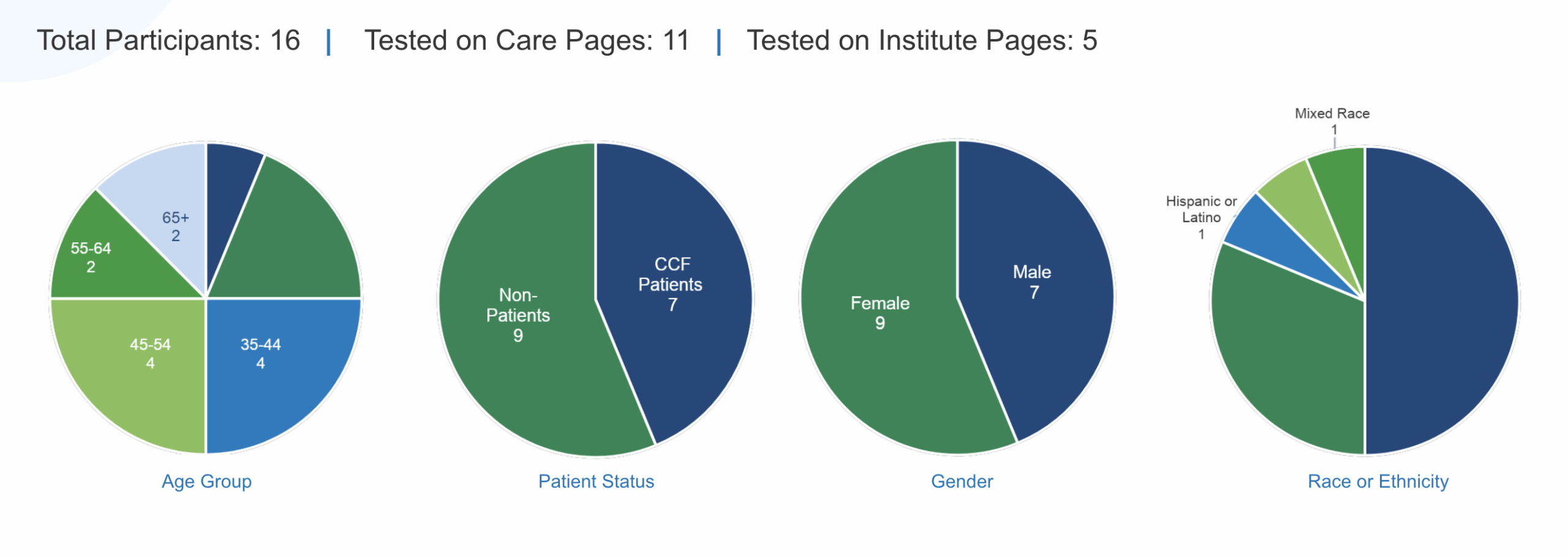
- Moderated interviews with 16 participants, including both existing and prospective patients.
- Interviews focused on minor health issues, serious conditions, second opinions, and website behaviors.
- Participants shared their goals, frustrations, and strategies for finding care.
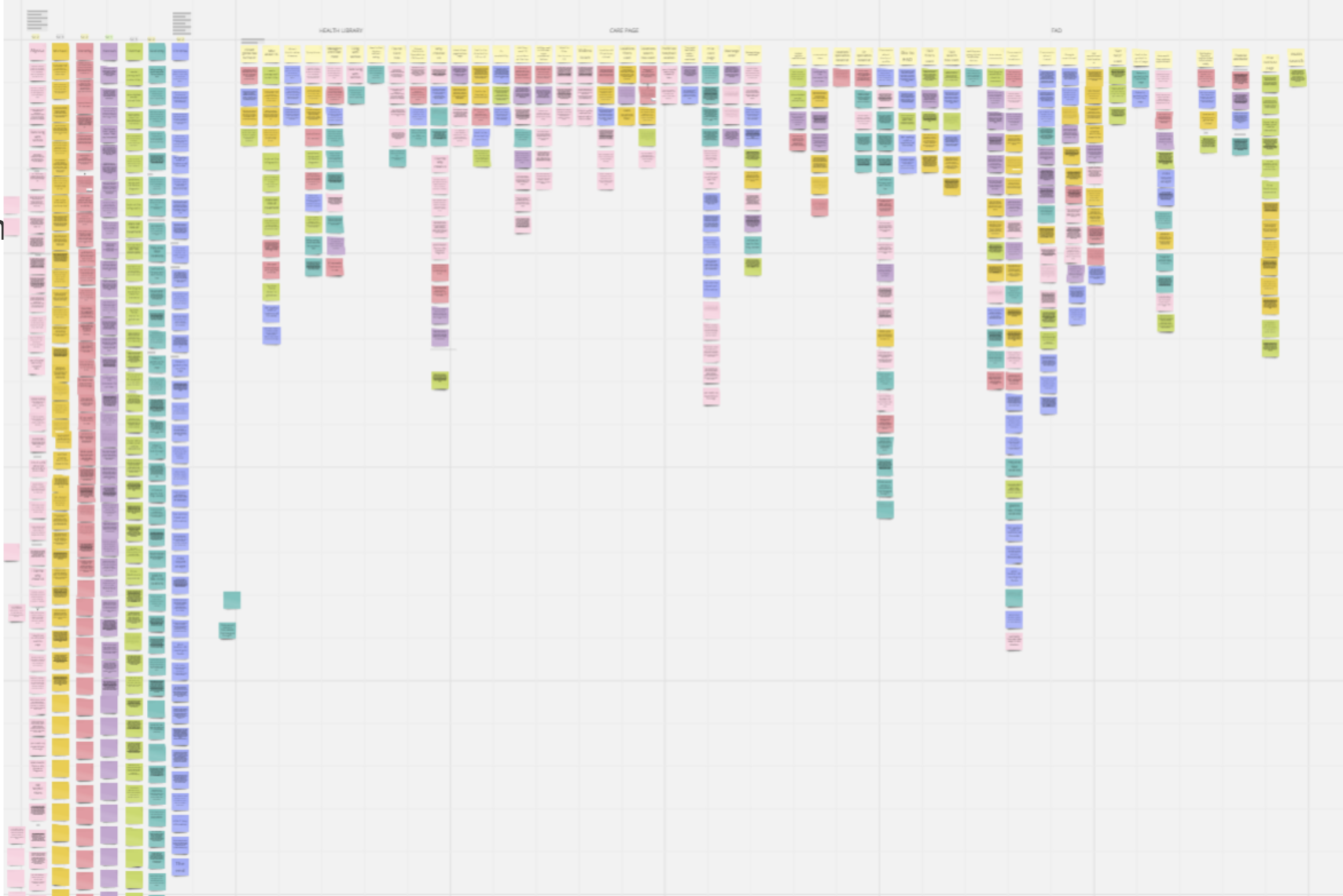
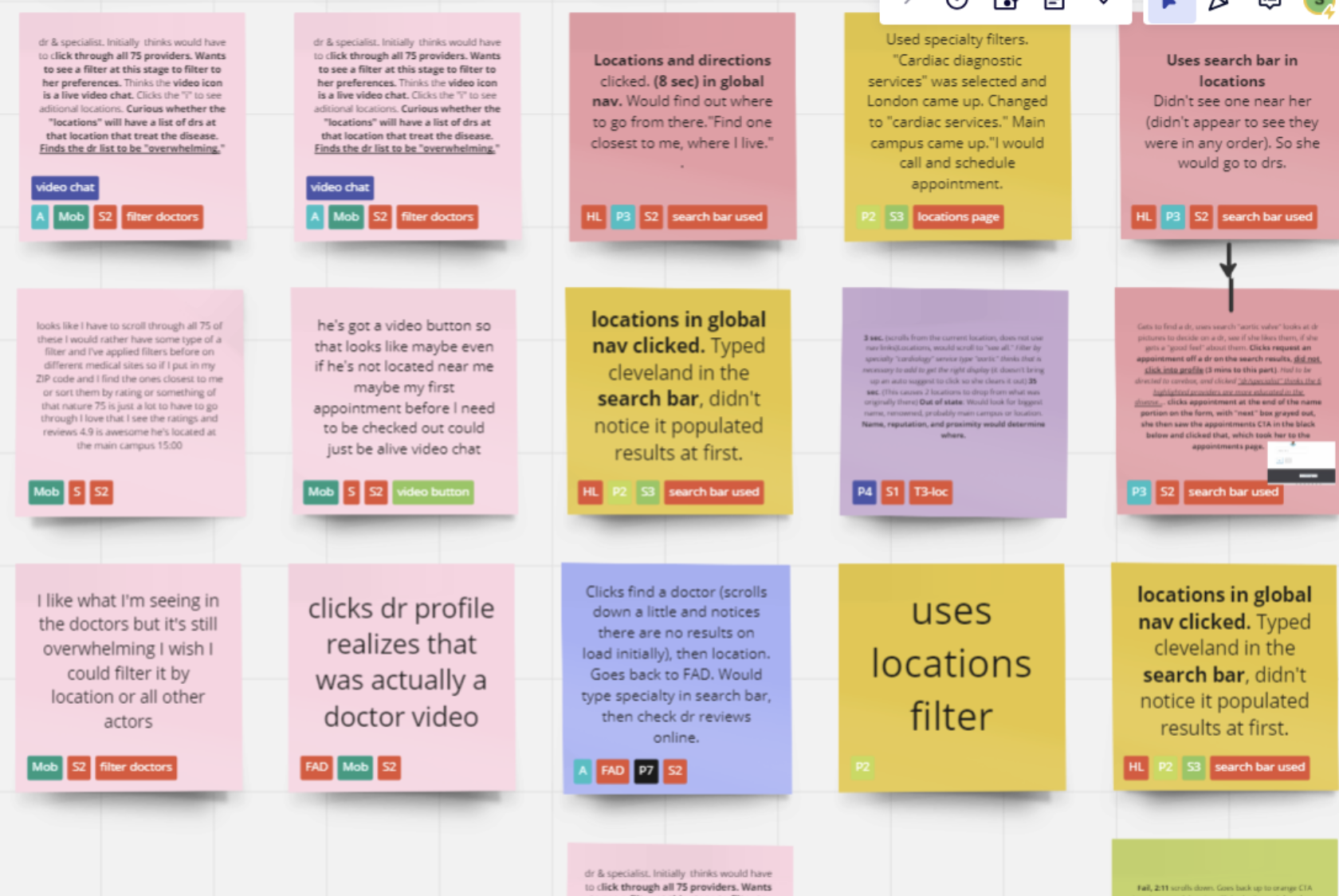
- Data was synthesized using affinity diagramming and spreadsheets to uncover patterns in patient needs, priorities, and barriers to accessing care.
Analysis: Affinity Diagramming
Key Findings
1. Primary User Goals are Finding Doctors & Understanding Health Conditions.
- Primary goals of the user center on finding the right doctors and understanding their health conditions.
- Secondary goals include researching treatments, services, insurance coverage, and communicating with doctors.
- Tertiary Goals, such as paying bills, visitor information, and learning about the hospital, are less critical but still part of the journey.
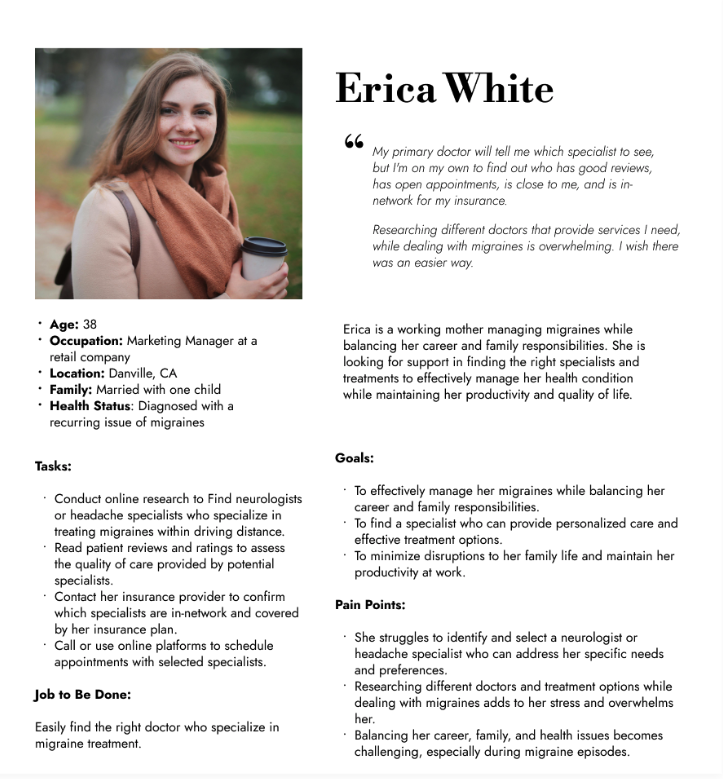
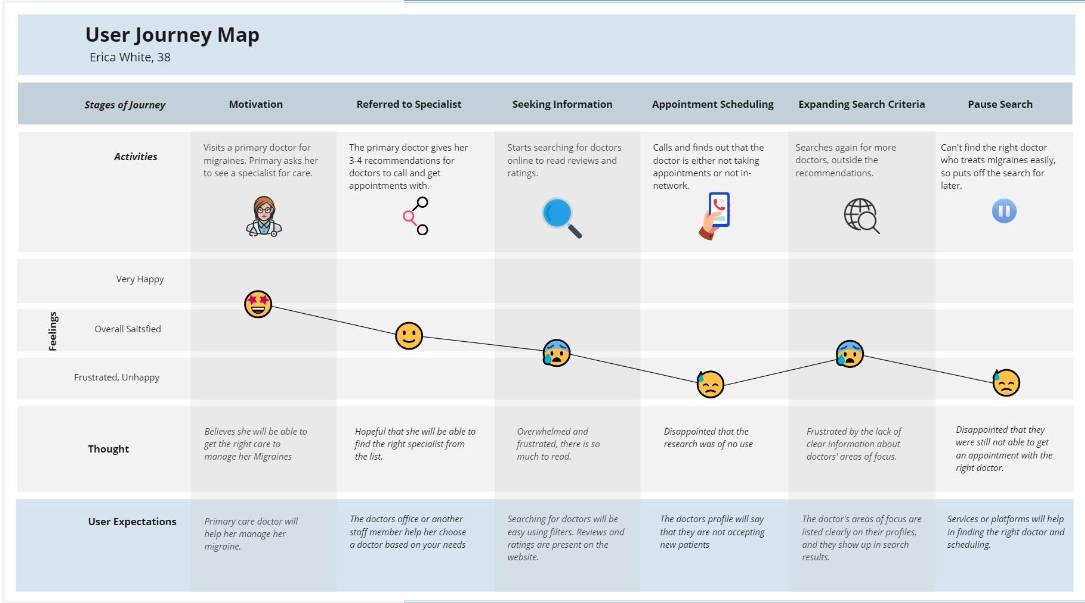
2. Patients feel unsupported after PCP referrals.
Finding: Patients rely on their PCP when faced with any severe health issues. After the initial guidance from the PCP, Patients feel unsupported, and left on their own to finding the right doctors, treatments and care
- Patients have difficulty finding the right doctors who they like and can treat their condition
- Patients must put in a lot of effort researching about treatment options, services hospitals or doctors offer, while dealing with their health
Solutions:
Physical Aspect
A concierge service to guide patients to the right care. A similar “Guided Care” model was also proposed by Human-Centered Design at CCF. This idea was out of scope of my team but it was presented as an in-person solution.
Digital Aspect
Address pain points digitally by ensuring:
- Clear information scent to guide care decisions
- List of doctors that treats the disease
- Clear path to available appointments
Recommendations
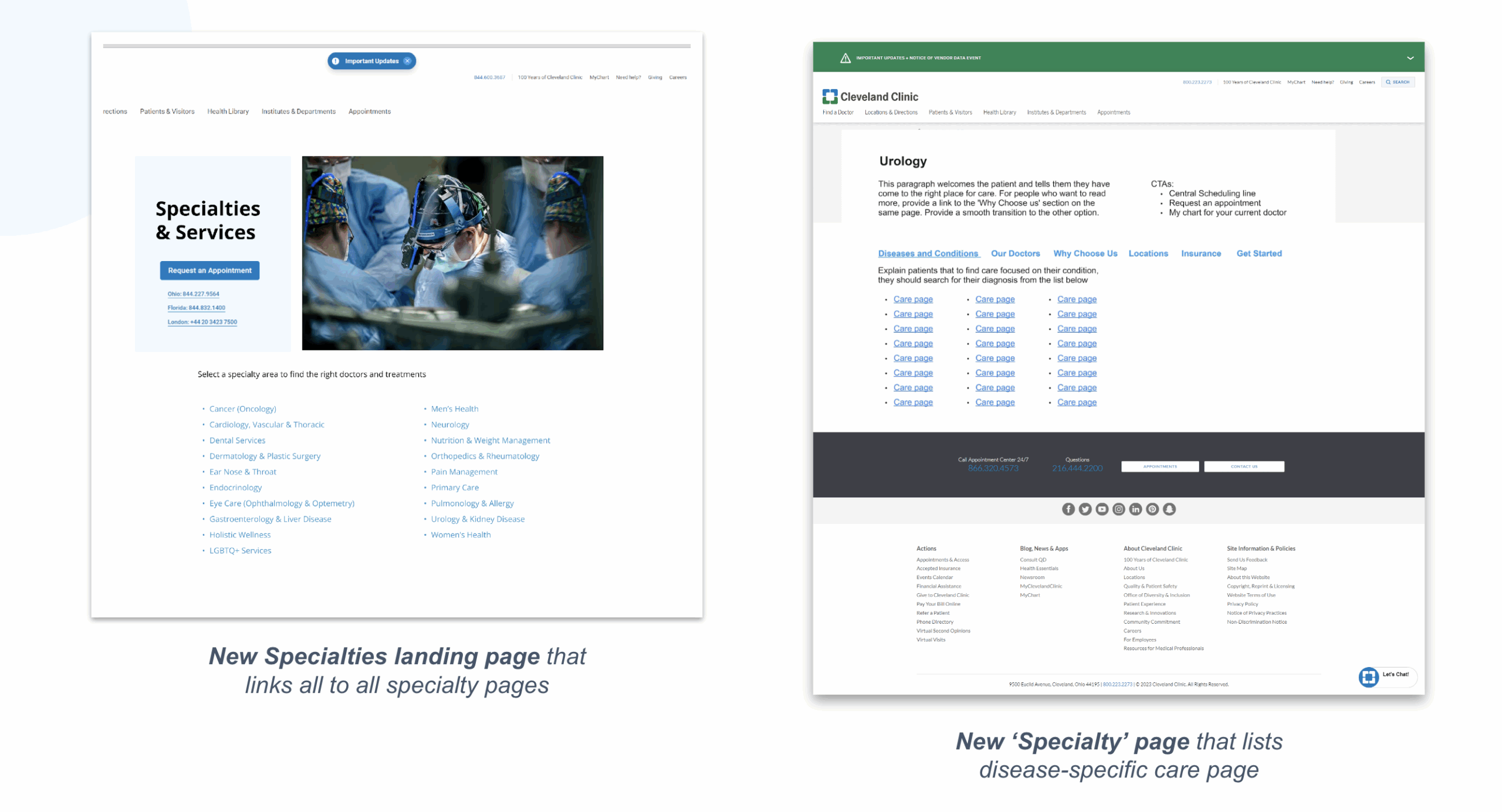
- Add a Specialties & Services tab in the main navigation.
- Create condition-based landing pages with doctor lists and appointment paths.
- Highlight Specialties and Services on the homepage.

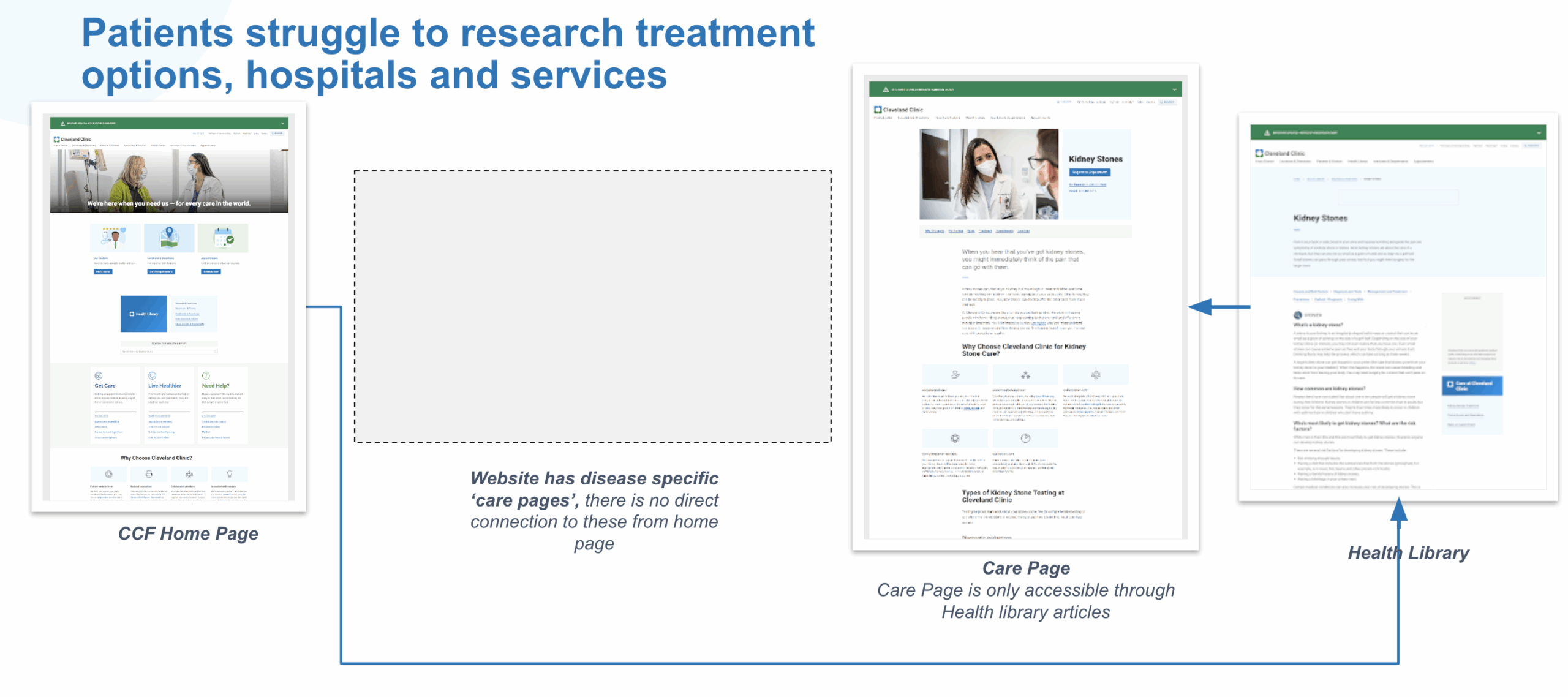
3. Patients Struggle to Find Treatments and Services
Finding: Analytics data showed that patients struggle to research treatments, and services. Disease-specific care pages are buried, often only found through the Health Library.
Recommendation:
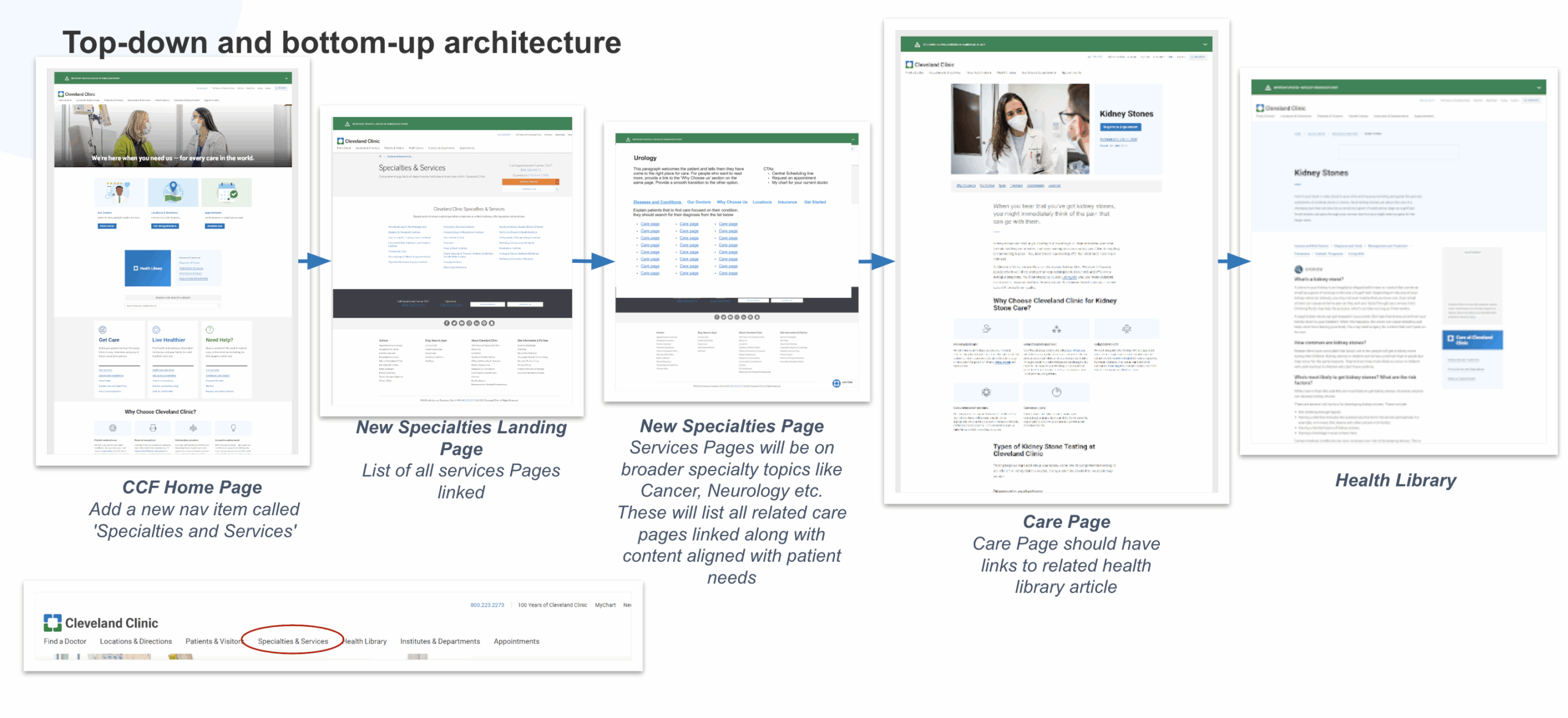
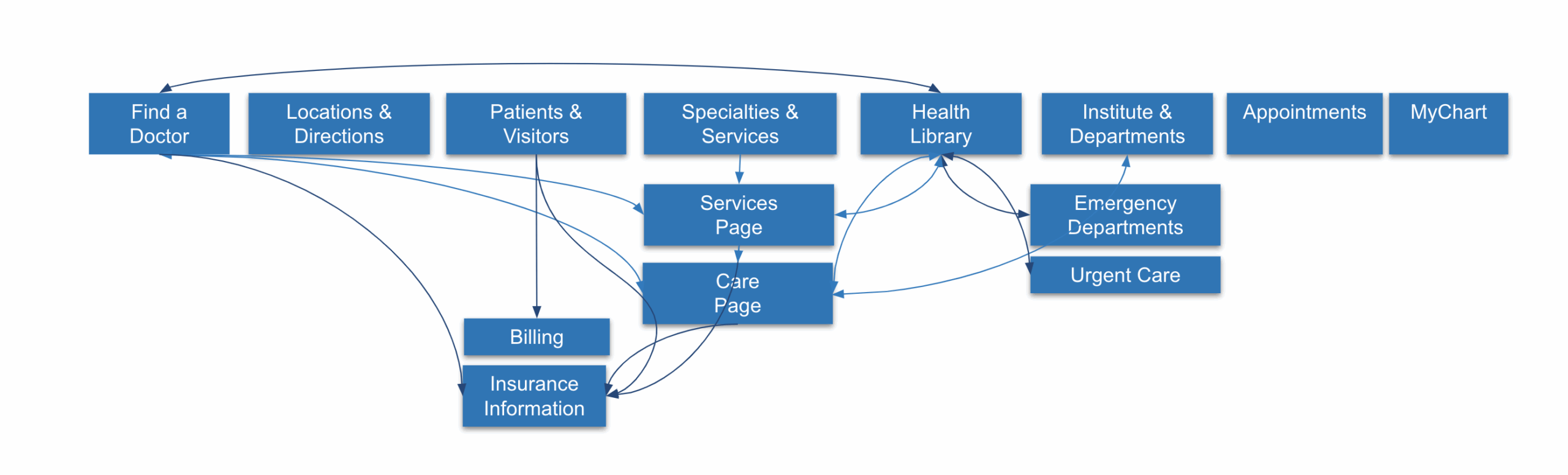
- Redesign information architecture with top-down and bottom-up navigation.
- Strengthen internal linking for SEO and easier discovery.
Study 2: Usability Study on Care Pages
My Role: Lead UX Researcher with 1 Jr. Researcher
Research Goals & Approach
Method: Moderated usability testing on PlaybookUX from August–September 2023, scenario-based tasks, screens and audio recorded.
Participants: Cleveland Clinic patients and non-patients from marketing’s 7-state region plus Florida.
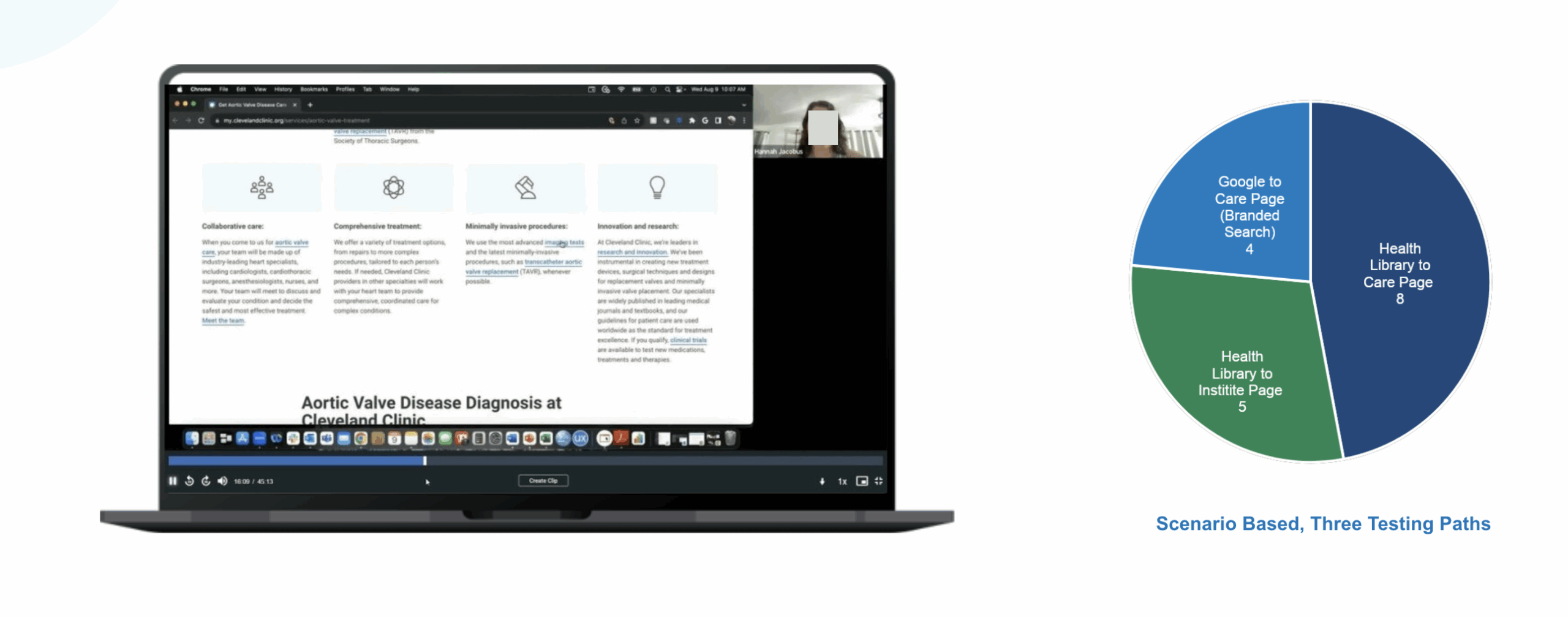
- Testing Paths
- Entry from Health Library to Institute Page
- Entry from Google to Care Page
- Entry from Health Library to Care Page
- Data Collected:
- Qualitative: Navigation patterns, user comments, observed confusion points
- Quantitative: Task success/failure, time on task, satisfaction ratings
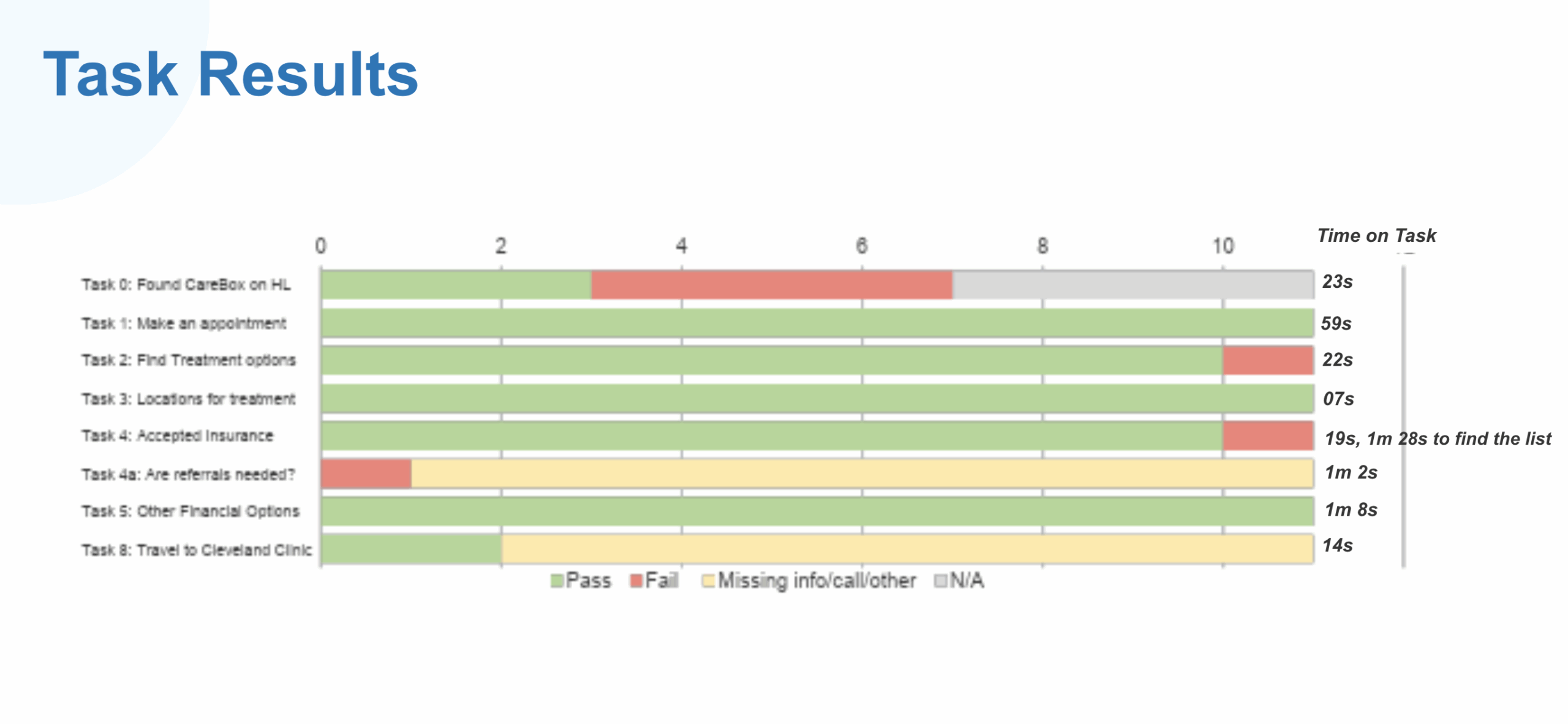
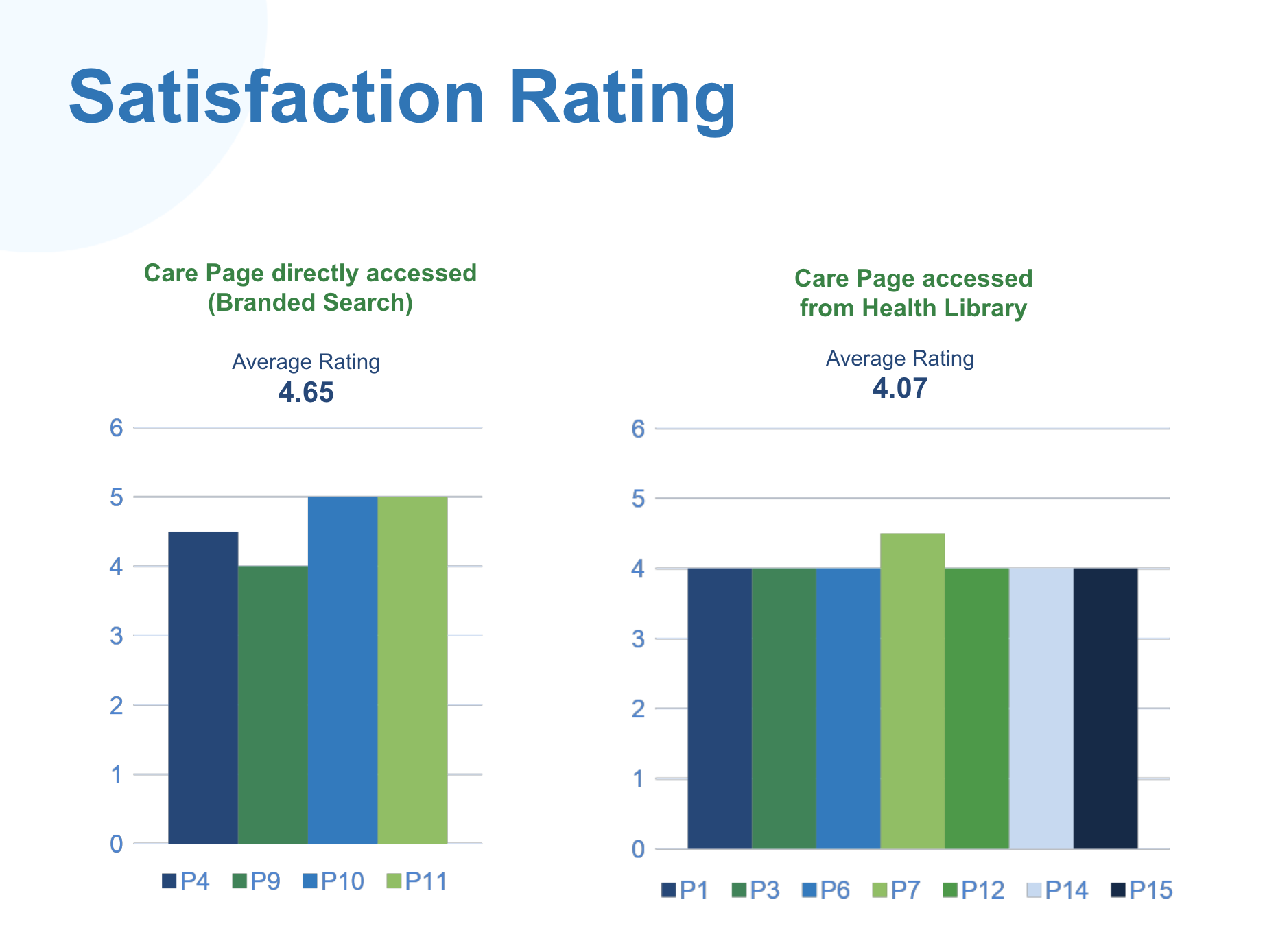
Analysis: Affinity diagramming and spreadsheets to identify usability issues and optimization opportunities.
Key Findings
1. Care Page Links are Hard to Find in Health Library
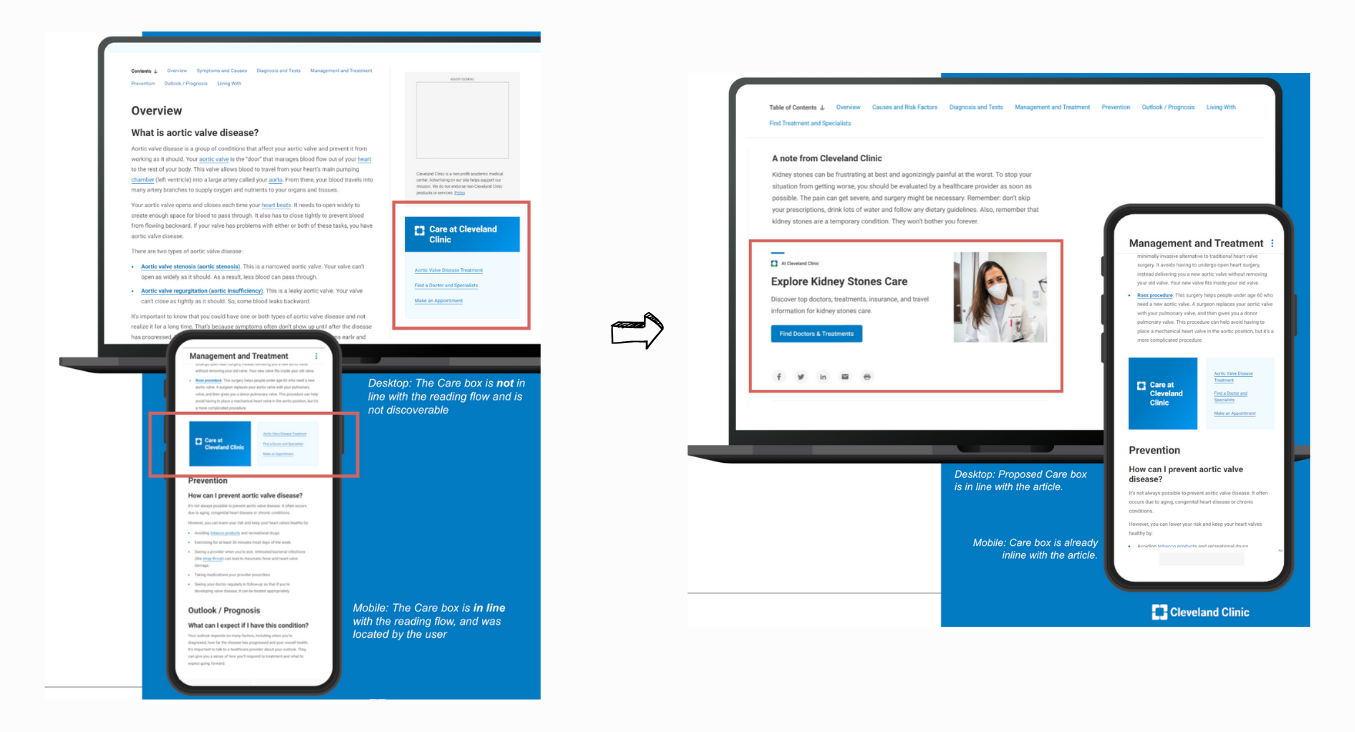
Finding: On desktop, the Care Page links in the Health Library were not visible within the reading flow, resulting in fewer visits to Care Pages from this highly visited Health Library page. The right-side placement felt like ads and was often overlooked, whereas on mobile, the links were inline with the text and more noticeable.
Desktop: 0 of 5 participants located the links; Mobile: 5 of 5 successfully found it.
Recommendations:
- Move care box inline within the article.
- Add links to the page navigation or header CTA.
- Include inline CTAs throughout the article for better discoverability.
2. High Bounce Rate Caused by Mid-Page Entry to Doctors Section
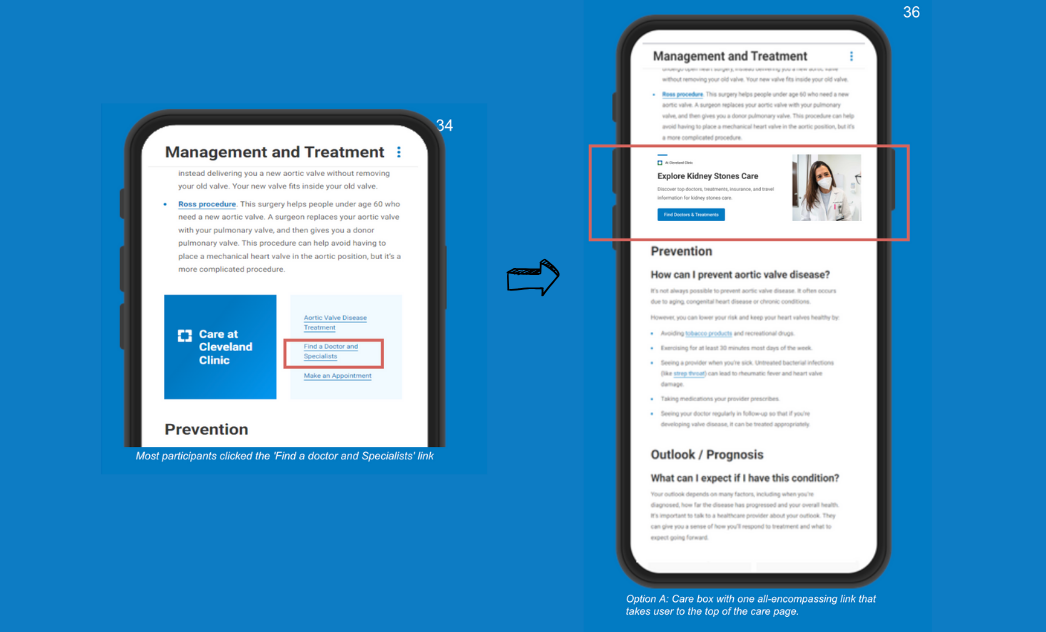
Finding: Most participants clicked ‘Doctors & Specialists,’ landing mid-page and exiting to the ‘Find a Doctor’ section of the website without engaging with other content, resulting in high bounce rates.
The generative study (below) found that finding doctors was their highest priority; however, the Care Page contained more detailed information that could support their care decisions, including treatment options, diagnosis, travel information, phone numbers and insurance details. By bypassing the Care Page, participants missed this critical content.
Recommendations:
- Use a single, prominent link on the Health Library to the Care Page instead of three separate links, improving discoverability of other information on the page.
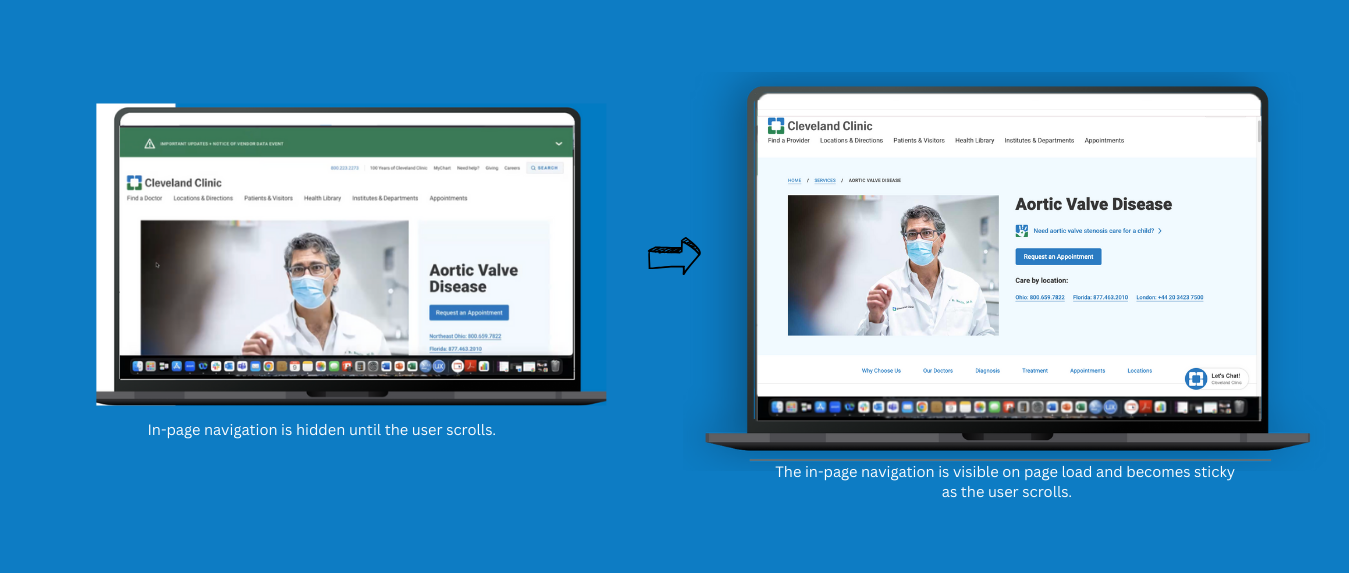
- Introduce sticky in-page navigation on the Care Page so users can easily access doctors (their top priority), treatments, and other key sections while still viewing the full page content.
Expected Impact:
Repositioning the Care Page link inline within the Health Library is expected to improve visibility, and drive a 5× increase in visits and single a clear link will lower bounce rates on the Care Page, and create a smoother, more engaging experience for users.
Expected Impact:
Recommendations reduce patient frustration and align with Cleveland Clinic’s goal of improving satisfaction and access for both local and out-of-state patients.
Stakeholder alignment + user research created a shared roadmap for improving digital patient experience.
Clearer navigation paths help patients find doctors, specialties, and treatments more quickly.